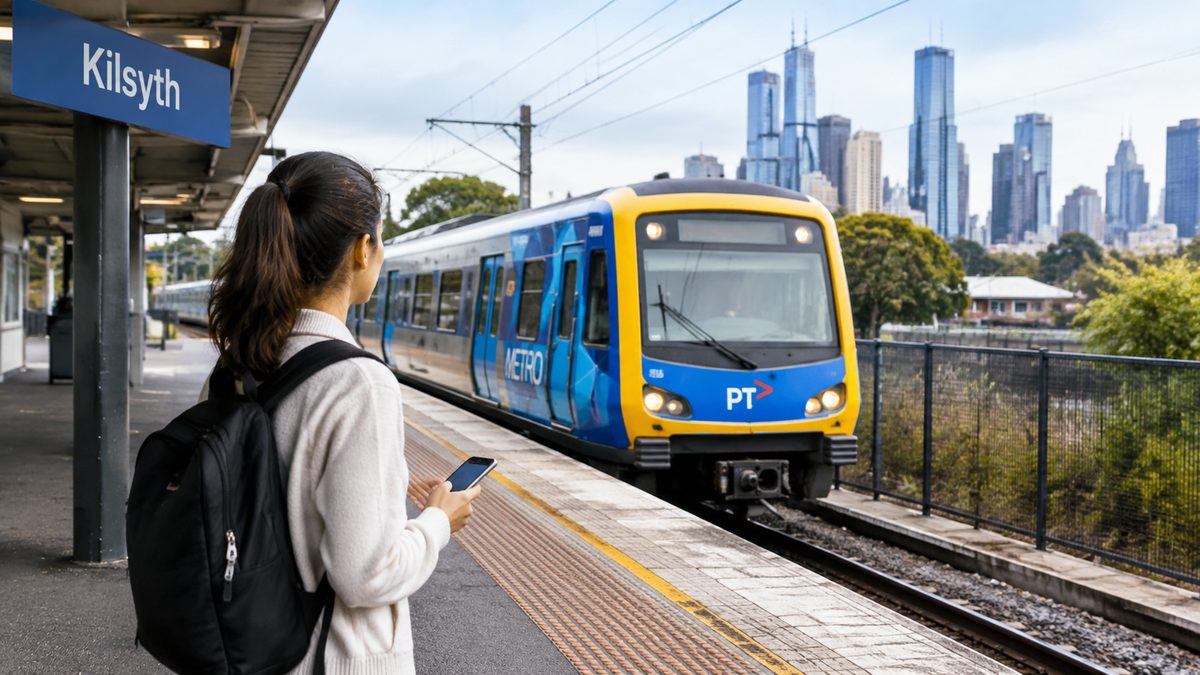
The easiest way to reach Melbourne CBD from Kilsyth is to take a local bus to a nearby railway station, then catch a Lilydale line train into the city. Driving may be faster outside peak times, while park and ride offers a handy middle ground. Your best option depends on where you start, when you travel, your parking needs, and how long the full trip takes.
Kilsyth doesn't have its own passenger railway station. So most public transport trips start with a bus, a lift, or a short drive to Mooroolbark or Croydon. From there, trains head toward Melbourne's central business district and stop at major city stations. nearby railway station
Which station should you use from Kilsyth?
Mooroolbark station is often the easiest train station for people in central or eastern Kilsyth. It's on the Lilydale line and can be reached by local roads or connecting buses. The best choice varies from street to street, so compare the full journey instead of picking whichever station looks closest on a map.
Croydon station may work better for people in western or south-western Kilsyth. Searches for Croydon railway information may still show up online, though current travel directions normally call the passenger stop Croydon station. It's also on the Lilydale line, with direct services heading toward the city.
People on Kilsyth's northern side may find Mooroolbark easier. If you're closer to Canterbury Road, Croydon may offer a cleaner route. A few extra kilometres may matter less than a regular bus or a simpler parking entrance.
Mooroolbark, Victoria sits directly north of Kilsyth and is a common rail gateway for local commuters. But the nearest station isn't always the quickest. A bus to Croydon with fewer turns may beat a slower link to Mooroolbark. Check the whole door-to-door trip before you leave.
How does the bus-and-train trip work?
Enter your exact starting address and city destination into the Public Transport Victoria journey planner. It will pair a local bus with a train and show the time allowed for your transfer. Check again shortly before leaving, since disruptions can change the suggested connection.
Your trip will usually follow this pattern:
- Walk to a nearby bus stop in Kilsyth.
- Take the suggested bus toward Mooroolbark or Croydon station.
- Leave enough time to reach the platform without rushing.
- Board a city-bound Lilydale line service.
- Get off at the city station closest to your final destination.
Public transport works best when you plan around the transfer, not just the train. A train might look quick on the timetable, but a late bus and missed connection can mean a long wait. I'd leave extra transfer time for an appointment, a flight connection, or a fixed work start.
A good plan covers the trip home too. Evening buses may run less often than trains. Before leaving Kilsyth, check the last connection from your chosen suburban station. That can stop a late return from ending with a costly ride home.
Where should you leave the train in the city?
Don't assume every city trip should finish at the same stop. Pick the station that cuts down your final walk or tram ride.
Flinders Street railway station works well for places near Federation Square, Southbank, and the southern end of the central grid. It also connects with tram routes along Flinders Street and nearby roads.
Some Lilydale line services travel through the City Loop. A loop station may be better for offices near Parliament, Melbourne Central, or Flagstaff. Stopping patterns and the direction through the loop can change, so check the platform display and journey planner instead of relying on habit.
If your destination isn't within easy walking distance, count the last city leg when comparing routes. Saving ten minutes on the train means little if you then wait for a tram or walk several blocks. The quickest route ends near your destination, not just somewhere inside the city.
Is park and ride a better choice?
Park and ride suits people who want to skip the bus without driving through inner Melbourne. You drive from Kilsyth to a Lilydale line station, park the car, and complete the trip by train.
This can remove the least certain part of a public transport trip. You choose when to leave home, can carry work gear more easily, and don't have to hunt for costly city parking. It may also simplify the trip home when local bus times don't line up with your train.
The catch is station parking. Popular spaces may fill early on weekdays. Rules can also differ between bays and nearby streets. Read each sign, stay off private property, and don't assume the same unrestricted space will be free every day.
Compare Mooroolbark and Croydon before building a routine. One might involve a longer drive but have an easier station entrance. The other could save road time but make parking harder. Try both on a normal workday and note how long it takes to get from your front door to the platform.
A family drop-off can work much the same way. The driver doesn't have to continue into Melbourne, and the passenger avoids parking. Use the signed passenger area and stay clear of bus lanes.
When does driving make more sense?
Driving may suit an early start, a late trip home, or a journey with heavy bags. It can also work well when several people are travelling together. Outside busy periods, it may be the fastest door-to-door option.
A common route starts on local streets, joins Canterbury Road, and then follows major roads toward inner Melbourne. Navigation apps may suggest another path when crashes, roadworks, or slow traffic affect the usual route. Always follow legal road signs if an app conflicts with a closure or turn restriction.
Traffic is the biggest snag. Roads may flow well near Kilsyth, then slow sharply as you approach the city. School traffic and wet weather can add more delays. A drive that feels easy on Sunday may take much longer in the weekday peak.
City parking changes the true cost too. Compare the full parking charge with your public transport fare and station access costs. If you're staying late, check when the car park closes. Some garages charge steep fees if you miss a booking window or enter the wrong facility.
Driving is less appealing when you must arrive at a set time. A train may look slower on paper, but once you're aboard, your city arrival can be easier to predict. For a job interview or medical booking, steady timing may matter more than the fastest possible trip.
How should you compare the main options?
Measure every option from your front door to the final city address. Don't compare a complete drive with train time alone. Count the walk, bus wait, transfer, parking search, and last city leg.
- Bus and train: Best when a useful bus stop is near home and your return falls within regular service hours.
- Park and ride: Best when station parking is available and you want more control over the suburban leg.
- Driving: Best outside heavy traffic periods or when your trip includes passengers, equipment, or a late finish.
- Lift to the station: Best when someone can drop you off without causing another parking problem.
Cost may change your choice. A solo driver pays for fuel, vehicle wear, tolls if used, and parking. A public transport passenger pays a fare but might spend longer waiting. A group can split driving costs, though someone still needs to book or find city parking.
Comfort counts too. A direct train gives you time to read or work, but a packed peak service may leave you standing. Driving offers private space, yet crawling traffic needs your attention for the entire journey.
For a regular commute, test each realistic option across a full week. One lucky drive or one delayed train won't give you a fair comparison. Write down your departure time, arrival time, total cost, and any missed connection. The pattern will reveal which route suits your life.
What can make the public transport trip easier?
Start with a valid way to pay and check current fare rules through Public Transport Victoria. Have your card or approved device ready before the bus arrives. Sorting out payment at the last second could cost you the connection.
Save the bus stop number and station name on your phone. That makes live departures easier to check when you're away from home. If you travel often, turn on service alerts for the Lilydale line.
Stand where the driver can spot you and signal clearly. At the station, check the passenger information screens for the right service and platform. During disruptions, trains may switch platforms.
If mobility is a concern, check the accessible path for each part of the journey. A route that seems easy may hide a steep walk, stairs, or a tricky road crossing. Check that lifts are working and allow more time to get from the bus stop to the platform.
Weather can change the best route. A bus stop with little cover may be fine in mild weather but miserable in heavy rain. Waiting in an open station car park can also be draining on hot days. A small change of route may offer better shelter without adding much travel time.
What should you do when trains are disrupted?
Check service updates before you leave Kilsyth. Planned works often mean replacement buses are used for part of the rail trip. The journey may take longer, and the bus could leave from a different spot near the station.
If the Lilydale line is disrupted, the journey planner may send you to another station or a replacement bus hub. Read the notice closely because some replacement services skip stops. At the station, follow staff directions and temporary signs.
Have a backup for time-sensitive trips. You might drive to another rail corridor, book city parking, or arrange a lift. Pick that backup before the morning of your journey, so a service alert doesn't force a rushed choice.
If a disruption starts after you've boarded, listen to the announcements before getting off. Leaving the train at an unfamiliar station without a clear next service may make the delay worse.
How early should you leave Kilsyth?
Work backwards from the time you need to reach your final address. Count the walk from the city station, then add some spare time for the bus-to-train transfer. For a fixed appointment, being early is safer than betting on a tight connection.
Peak travel needs a bigger margin. Buses can lose time in local traffic, station car parks may fill up, and city streets can slow the last part of a drive. Off-peak travellers can often allow less time, though checking service frequency still matters.
For your first attempt, leave one service earlier than the journey planner's minimum suggestion. Once you know the stop, station entrance, and city exit, you can tighten the timing. A first trip often takes longer because every choice is unfamiliar.
Which route is the best default choice?
For most solo weekday trips, take a bus or make a short drive to Mooroolbark or Croydon, then board a Lilydale line train toward Melbourne's central business district. Choose park and ride if the local bus adds too much waiting. Drive the whole way when you're travelling outside heavy traffic or need the car later in the day.
Before leaving, enter your exact Kilsyth address and final CBD destination into the Public Transport Victoria journey planner, then pick the option with the most reliable door-to-door arrival time.
From Kilsyth, you can reach the Melbourne central business district by driving or taking local public transport connections, with travel times varying according to service schedules and Traffic congestion.