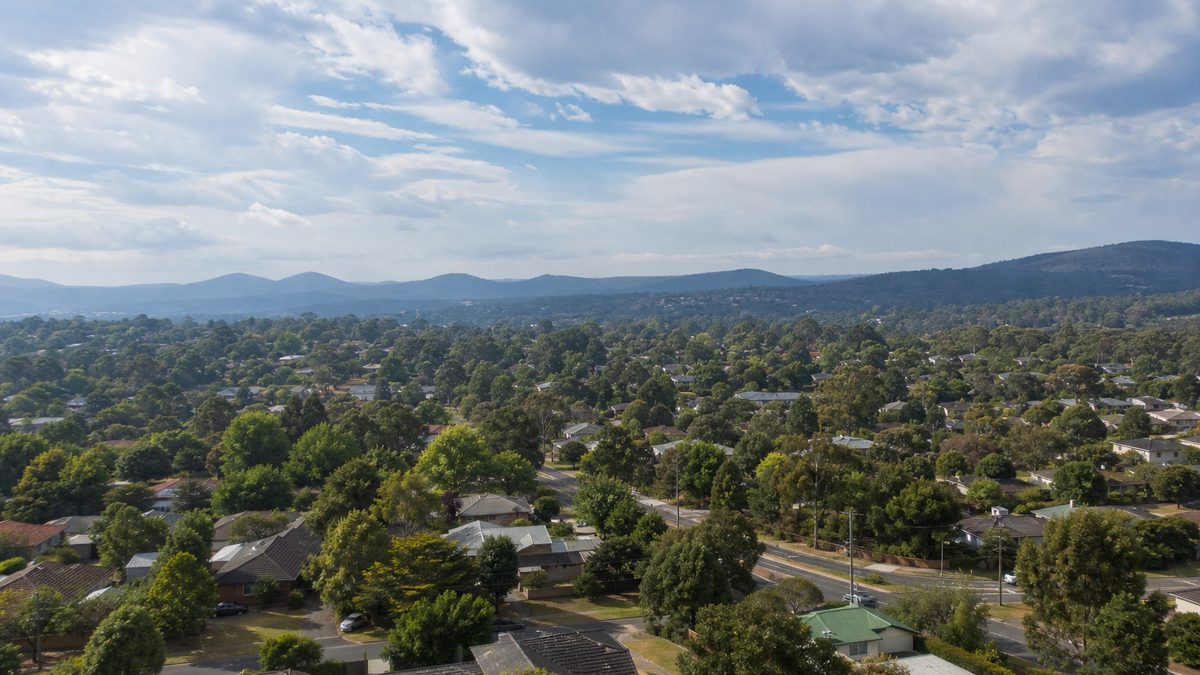
The latest complete official profile for Kilsyth is the 2021 Census count of 11,699 people. Observed results from the 2026 Census are not available yet. The Australian Bureau of Statistics says data collected in that Census will start to be released in June 2027.
An older Yarra Ranges Council report forecast 10,310 residents in its Kilsyth area by 2026. That number covers a different area from the full ABS suburb and is a modelled projection, not an observed population count. The two figures cannot be used to claim that Kilsyth gained or lost residents.
This distinction matters because a statistic can look current simply because it appears on a page dated 2026. The date of the page does not change the date, boundary or method behind the number.
What can Kilsyth data tell us in 2026?
The best full profile available in 2026 is the Australian Bureau of Statistics 2021 Census QuickStats for Kilsyth Suburb and Locality, Victoria, identified as SAL21354. It covers population, age, birthplace, work, income and housing.
These are observed Census results from 2021. They are useful benchmarks, but they are not live measurements of Kilsyth in 2026. The ABS also applies small random changes to Census cells to protect privacy. That can cause minor differences between totals in related tables.
The ABS 2026 Census release timetable says collected data will begin appearing from June 2027. A verified suburb profile based on the 2026 Census therefore cannot be published before those results arrive.
Other datasets may be newer than the Census. Property records, crime reports and population estimates follow their own schedules. They may also use postcodes, council areas or other boundaries instead of the ABS suburb boundary. A newer date does not make those measures interchangeable.
Before using any Kilsyth figure, check four details: the publisher, reference period, geographic boundary and type of measure. A count records what was observed. An estimate uses available evidence to approximate a value. A forecast models what may happen later. A median describes the middle value in a set. Each answers a different question.
What does the latest official demographic profile show?
The ABS counted 11,699 people in the Kilsyth Suburb and Locality at the 2021 Census. This is the firm population benchmark for the full statistical locality. It should always be labelled as a 2021 count rather than a 2026 resident population estimate.
The recorded population was 47.6% male and 52.4% female. Kilsyth had a median age of 38 years. A median splits the population into two halves by age. It does not describe the age of a typical household or show how the age profile has changed since Census night.
Aboriginal and Torres Strait Islander people numbered 143, equal to 1.2% of the population. Indigenous status was not stated for 322 people, or 2.8% of residents. That missing response must remain visible when the figure is interpreted.
The Census recorded 8,929 Australian-born residents, representing 76.3% of Kilsyth's population. Country of birth does not measure citizenship or ancestry. A person may have Australian citizenship while being born overseas, and an Australian-born resident may report ancestry linked to another country.
Myanmar was the largest non-Australian country-of-birth response in the leading responses listed by the ABS. It accounted for 374 residents, or 3.2% of the locality population. This does not mean every other country had a smaller total across every possible classification. It means Myanmar was the largest overseas response shown in the ABS summary list.
Together, these figures provide a clear demographic baseline. They show who was counted in 2021 within SAL21354. They do not prove what the population mix is in 2026, because births, deaths and moves since Census night are not captured in this profile.
What do the employment and income figures measure?
Among Kilsyth residents aged 15 years and over, 6,068 people reported being in the labour force in 2021. That represented 63.7% of the relevant age group. The labour force includes people who were employed and those who were unemployed but met the Census definition.
Of the residents who reported being in the labour force, 3,574 worked full-time and 1,870 worked part-time. Their corresponding shares were 58.9% and 30.8%. A further 217 people were recorded as unemployed, equal to 3.6% of people reporting that they were in the labour force.
That 3.6% figure is a Census measure for 2021. It is not a live suburb unemployment rate. The ABS Labour Force Survey supplies Australia's official labour force estimates, but it does not publish an equivalent estimate for the Kilsyth suburb.
Professionals formed the largest broad occupation group, with 1,122 employed residents, or 19.2%. Technicians and trades workers followed with 1,066 residents, or 18.2%. These classifications describe the jobs held by people who lived in Kilsyth. They do not count local businesses or positions based inside the suburb.
Hospitals, excluding psychiatric hospitals, were the largest detailed industry response listed in the ABS profile. They employed 226 Kilsyth residents, or 3.9% of employed residents. Aged care residential services employed another 192 residents, or 3.3%.
The place of work may have been outside Kilsyth. Someone living in the suburb and working at a hospital elsewhere still appears in Kilsyth's resident industry figures. For that reason, these numbers cannot be used to estimate how many hospital or aged care jobs existed within the suburb itself.
Median weekly personal income was $803. Median weekly family income was $2,056, while median weekly household income was $1,649. The ABS collected income in ranges and calculated these medians with help from Survey of Income and Housing information.
All three amounts are nominal 2021 values. They have not been adjusted to 2026 dollars and do not show current wages or spending power. Anyone assessing present affordability needs a separately dated income source and a clear method for dealing with price changes.
What does the Census reveal about Kilsyth housing?
The 2021 Census recorded 4,948 private dwellings in Kilsyth. The detailed occupancy table classified 4,588 as occupied and 248 as unoccupied. Those counts represented 94.9% and 5.1% of classified private dwellings.
The detailed table excludes visitor-only households and other households that could not be classified. Privacy adjustments can also create small gaps between headline totals and detailed categories. The difference should not be treated as missing housing stock.
Separate houses made up most occupied private dwellings. The ABS recorded 3,887 separate houses, equal to 84.7% of the applicable occupied dwelling total. This describes the physical form of the housing stock in 2021. It says nothing by itself about sale demand, construction quality or current value.
Tenure data recorded 1,490 occupied dwellings owned outright and 1,991 owned with a mortgage. Another 908 were rented. Their reported shares were 32.5%, 43.4% and 19.8%.
The rented category excludes homes occupied rent-free. It is also not directly comparable with the rented definition used in the 2016 QuickStats. A trend calculated without checking that definition could give a false picture of change.
Kilsyth's median weekly rent was $391 in the 2021 Census. Its median monthly mortgage repayment was $1,972. Median rent excludes rent-free dwellings. Both figures describe reported housing payments at that Census, not asking rents or borrowing costs in 2026.
Census housing data should not be used as a substitute for current property market data. A present median sale price, number of sales, rental yield or list of houses for sale requires a source with its own date, sample and property definitions. Market figures may cover a rolling period and can change when late sales are added.
Why does the council's 2026 forecast use a different population figure?
A Yarra Ranges Council background report projected that its Kilsyth area would grow from an estimated 9,547 residents in 2016 to 10,310 residents in 2026. The same older Forecast.id model projected average annual growth of 0.76% and more than 400 additional households over that period.
The 10,310 figure is a planning forecast. It is not a measured 2026 population and does not come from the 2026 Census. Forecasts use assumptions about housing, household size and population change. They remain forecasts even after the target year arrives unless later observations confirm them.
The boundary creates another limit. The council report covers the Kilsyth area used by Yarra Ranges Council. The full ABS Kilsyth Suburb and Locality also extends into the City of Maroondah. The council area is therefore not the same geographic unit as SAL21354.
This explains why the projected 10,310 and the ABS count of 11,699 should not be subtracted or placed in a growth calculation. Doing so would mix a modelled value for one area with an observed count for another area and period. The result would look precise while measuring no valid change.
A sound comparison needs the same boundary, measure and reference period. If any one of those changes, the figures belong in separate columns with a note explaining the difference.
How can you check another Kilsyth statistic?
Use this test before accepting a population, property or crime claim:
- Identify the publisher. Find the agency or company responsible for the underlying data, rather than relying on a search extract or copied graph.
- Find the reference period. Check whether the number covers Census night, a calendar year, a financial year, a month or a rolling period.
- Match the boundary. Confirm whether the data covers Kilsyth suburb, postcode 3137, Kilsyth South, a council area or another reporting zone.
- Name the measure. Record whether the figure is an observed count, estimate, forecast, median, rate or market measure.
This test separates the 2021 ABS count from the council's 2026 forecast. It also prevents a postcode crime report or rolling property median from being presented as though it describes the same people, homes and dates as the Census.
Actionable takeaway: save each Kilsyth statistic with its source, period, boundary and measure type before you quote or compare it.